Welcome to contact us: aaa888@zhongsheng1688.cn


Views: 0 Author: Site Editor Publish Time: 2026-03-09 Origin: Site
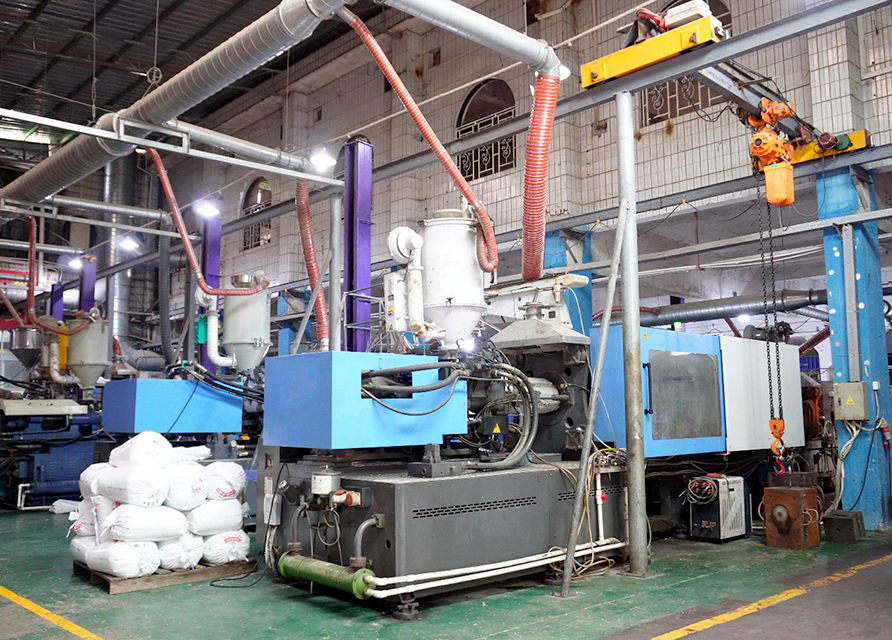
Choosing the wrong molding process can cost you more than money. It can mean inconsistent wall thickness, poor neck finishes, excess flash, or containers that simply don't perform as intended. For manufacturers sourcing plastic bottles and hollow parts, the decision between injection blow molding and extrusion blow molding is one of the most consequential choices in the production process.
Both methods produce hollow plastic components, but they do so in fundamentally different ways—and each has a clear set of strengths. Understanding how the injection blow molding process works, how it compares to extrusion blow molding, and where the injection stretch blow molding process fits into the picture will help you make a smarter, more cost-effective choice.
This guide breaks down both processes in plain terms, compares them side by side, and answers the most common questions manufacturers ask before committing to a production method.
The injection blow molding process combines two stages of plastic forming into one continuous operation. First, molten plastic is injected into a preform mold around a steel rod (called a core pin), creating a test-tube-like preform. That preform is then transferred—still on the core pin—to a blow mold, where compressed air expands it into the final hollow shape.
Because the preform is fully formed before blowing begins, the resulting part has exceptional dimensional accuracy. Wall thickness is uniform, the neck finish is precise, and there is no parting line flash to trim. This makes the injection blow molding process particularly well-suited for pharmaceutical bottles, cosmetic containers, and any application where consistency and cleanliness are non-negotiable.
The injection stretch blow molding process (ISBM) is a variation that adds a mechanical stretching step. After the preform is injection-molded, a stretch rod extends it axially before compressed air blows it radially into the mold cavity. This biaxial orientation improves the molecular structure of the plastic, resulting in stronger, lighter, and more transparent containers.
PET bottles—including most water bottles and carbonated drink containers—are almost universally made using the injection stretch blow molding process. The biaxial orientation significantly improves barrier properties, clarity, and drop resistance, all of which matter when packaging beverages or personal care products.
Extrusion blow molding (EBM) takes a different approach. A continuous tube of molten plastic, called a parison, is extruded downward between two open mold halves. The mold closes around the parison, pinching it at the bottom, and compressed air inflates it to fill the mold cavity.
When the part cools and the mold opens, a flash trim is required to remove excess plastic at the pinch points. This extra step adds time and material waste, but the process itself is fast, flexible, and capable of producing complex shapes—including handles, asymmetric containers, and large industrial containers—that the injection blow molding process cannot easily accommodate.
The table below summarizes the key differences between the two processes across the most important production and product variables.
Feature | Injection Blow Molding | Extrusion Blow Molding |
|---|---|---|
How it works | Preform injection + blow molding | Parison extrusion + blow molding |
Wall thickness control | Excellent—highly uniform | Good, but less precise |
Neck finish precision | Very high—ideal for threaded closures | Moderate—trimming often required |
Flash/waste | None | Yes—flash trimming required |
Part complexity | Limited to symmetrical shapes | Handles, irregular shapes possible |
Tooling cost | Higher | Lower |
Production volume | Medium to high | Low to very high |
Common materials | HDPE, PP, PET, PVC | HDPE, LDPE, PP, PVC |
Typical applications | Pharma bottles, cosmetic containers | Automotive ducts, jerricans, toys |
Transparency | Excellent | Good |
Cycle time | Moderate | Fast |
Because the neck and body dimensions are set during injection rather than relying solely on the blow stage, the injection blow molding process delivers repeatable, tight tolerances. This matters for containers that need to accept caps, pumps, or dispensing equipment with no variation across thousands of units.
Extrusion blow molded parts require flash trimming after demolding. Injection blow molded parts require none. That translates to less material waste, shorter cycle times for finishing, and a cleaner production floor.
For transparent containers—think medical dropper bottles, cosmetic serums, or eye care packaging—injection blow molding produces parts with better clarity and surface finish than most extrusion methods. The controlled preform formation eliminates the optical distortion that parison handling can introduce.
Pharmaceutical and personal care products demand airtight, leak-proof closures. The injection blow molding process molds the neck finish in the injection stage, not the blow stage, so thread geometry and sealing surfaces are consistently accurate.
Extrusion blow molding handles complex geometries that injection blow molding cannot. Integrated handles, off-center necks, and non-round cross-sections are all achievable. This is why large automotive fluid reservoirs, fuel tanks, and consumer products with ergonomic grips are typically extrusion blow molded.
Extrusion blow molds are generally simpler and less expensive to manufacture than injection blow molds. For short runs or prototype development, this lower upfront cost makes EBM the more practical choice.
Continuous extrusion allows for fast cycle times and multi-cavity tooling configurations that can support very high production volumes. Large-scale packaging operations—particularly for household chemicals and industrial containers—often rely on EBM for this reason.
Extrusion blow molding is compatible with a broader range of plastics, including multilayer structures that combine barrier and structural materials in a single parison. This is important for packaging that needs oxygen or moisture barrier properties.

The answer depends on three factors: part geometry, quality requirements, and production volume.
Choose the injection blow molding process if:
Your containers require precise neck finishes and leak-proof closures
Optical clarity is important to the end product
You need consistent wall thickness without trimming or finishing operations
Your application is in pharmaceuticals, cosmetics, or personal care
Choose the injection stretch blow molding process if:
You are producing PET containers for beverages, personal care, or food products
Weight reduction and improved barrier properties are priorities
Your volumes justify the tooling investment
Choose extrusion blow molding if:
Your parts have handles, irregular shapes, or large sizes
You are working with lower budgets for tooling
Speed and volume output are primary concerns
You are producing industrial, automotive, or household chemical containers
Tooling costs for injection blow molding are typically higher because the molds are more complex. However, the elimination of flash trimming and secondary finishing operations can offset some of that cost over longer production runs. For high-precision applications, the quality benefits often justify the investment.
Not easily. The process is best suited for symmetrical, relatively simple hollow shapes. If your design requires an integrated handle or a highly irregular profile, extrusion blow molding is the more appropriate choice.
The most common materials include HDPE (high-density polyethylene), PP (polypropylene), PVC, and PET. Each material behaves differently in the preform injection stage and the blow stage, so material selection should be confirmed with your manufacturer based on your container's end-use requirements.
Standard injection blow molding expands the preform radially using compressed air alone. The injection stretch blow molding process adds an axial stretching step using a mechanical rod before the radial blow. This biaxial orientation improves molecular alignment, resulting in stronger, lighter, and clearer containers—most commonly seen in PET bottles.
Start by evaluating your container's shape, required tolerances, material, and volume. If precision and cleanliness are the priorities—such as in pharmaceutical or cosmetic packaging—injection blow molding is likely the better fit. If geometry is complex or tooling budget is constrained, extrusion blow molding may serve you better. Working with an experienced manufacturer like Zhongsheng Plastic can help you evaluate both options against your specific requirements.
Injection blow molding and extrusion blow molding each solve a different set of manufacturing problems. One delivers precision, cleanliness, and consistency. The other offers flexibility, speed, and a lower barrier to entry. Neither is universally superior—the right process depends entirely on what your product demands.
For most pharmaceutical, cosmetic, and personal care containers, the injection blow molding process provides a level of quality and repeatability that extrusion methods struggle to match. For large, complex, or high-volume containers, extrusion blow molding remains a practical and cost-effective solution.
The most important step is working with a manufacturer that has deep experience in both processes and can guide your decision based on your part design, material, and volume—not just what's convenient for their production floor. Zhongsheng Plastic has over 20 years of expertise in both injection molding and blow molding, serving industries from pharmaceuticals to automotive to commercial packaging.


