Welcome to contact us: aaa888@zhongsheng1688.cn


Views: 0 Author: Site Editor Publish Time: 2025-11-04 Origin: Site

Bottle containers have come a long way from simple glass jars and basic plastic vessels. As we move through 2025, designers and manufacturers are reimagining how we store, transport, and interact with liquids and materials. From smart technology integration to sustainable materials, the bottle container industry is experiencing a revolution that touches everything from household storage to industrial applications.
Whether you're a product designer, manufacturer, or simply someone interested in the evolution of everyday objects, understanding these innovations can help you make smarter choices about packaging and storage solutions. This post explores the most exciting developments in bottle container design, with particular attention to advances in plastic bucket technology and other versatile storage solutions.
One of the most significant trends reshaping bottle container design is the integration of smart technology. Manufacturers are embedding sensors and connectivity features that transform passive containers into active participants in inventory management and quality control.
Smart bottles now include temperature monitors that alert users when contents reach unsafe levels. Some designs feature built-in freshness indicators that change color based on the condition of stored materials. For industrial applications, RFID tags and QR codes enable seamless tracking throughout supply chains.
These technological additions don't just add convenience. They reduce waste by helping users identify spoilage before it becomes a problem. In commercial kitchens and laboratories, smart containers ensure compliance with safety regulations by maintaining accurate logs of storage conditions.
Environmental concerns have pushed designers to explore alternatives to traditional plastics. While the plastic bucket remains a staple in many industries due to its durability and cost-effectiveness, manufacturers are developing more sustainable versions using recycled materials and bio-based polymers.
Post-consumer recycled (PCR) plastics are becoming standard in bottle container production. These materials maintain the strength and versatility of virgin plastics while significantly reducing environmental impact. Some manufacturers now offer containers made from 100% recycled ocean plastics, turning environmental problems into functional solutions.
Bio-based plastics derived from corn starch, sugarcane, and other renewable resources are gaining traction. These materials offer similar performance characteristics to petroleum-based plastics but with a lower carbon footprint. As production scales up, prices continue to drop, making sustainable options increasingly accessible.
Space efficiency has become a priority in both residential and commercial settings. Container designers are responding with modular systems that maximize vertical storage while maintaining easy access to contents.
Modern plastic buckets and bottle containers feature interlocking lids and bases that create stable towers without additional shelving. Some designs include collapsible elements that reduce storage space when containers aren't in use. This flexibility is particularly valuable for seasonal businesses and home users with limited storage areas.
Manufacturers are also developing standardized sizing systems that work across different product lines. This interoperability allows users to mix and match containers from various brands while maintaining a cohesive organizational system.
Container design now prioritizes user comfort and accessibility. Handles have evolved beyond simple loops to include contoured grips that distribute weight more evenly and reduce hand fatigue. Some plastic buckets feature dual-position handles that accommodate both carrying and pouring motions.
Pour spouts have become more sophisticated, with designs that prevent dripping and allow for precise dispensing. Twist-lock mechanisms create more secure seals while remaining easy to operate, even with wet or gloved hands. These improvements benefit everyone from industrial workers to home users preparing bulk ingredients.
Child-resistant features have advanced significantly without sacrificing accessibility for adults. New locking mechanisms use intuitive patterns that adults can quickly learn but children cannot easily replicate, improving safety without creating frustration.
As industries become more specialized, container designs are following suit. The medical field now uses containers with tamper-evident seals and precise volume markings. Food service operations benefit from containers with built-in measuring systems and clear visibility for inventory management.
Chemical storage has seen particular innovation, with containers featuring enhanced resistance to specific substances and improved venting systems that prevent pressure buildup. Color-coding systems and prominent labeling areas help prevent dangerous mix-ups in environments where multiple substances are stored.
Artists and crafters are benefiting from containers designed specifically for paint, resins, and other materials that require particular storage conditions. These specialized designs often include features like built-in mixing grids and multiple compartments for organizing supplies.
Understanding the strengths and limitations of different materials helps in selecting the right container for specific applications.
Material Type | Durability | Chemical Resistance | Temperature Range | Recyclability | Best Use Cases |
|---|---|---|---|---|---|
HDPE Plastic | Excellent | Very Good | -40°F to 180°F | High | General storage, chemicals, food-safe applications |
PP Plastic | Very Good | Excellent | 0°F to 240°F | High | Hot liquids, microwave-safe containers, medical supplies |
Glass | Good | Excellent | -20°F to 300°F | Very High | Premium products, laboratory use, long-term storage |
Stainless Steel | Excellent | Excellent | -40°F to 500°F | Very High | Industrial applications, food service, corrosive materials |
Bio-based Plastics | Good | Moderate | 40°F to 160°F | Moderate | Consumer products, short-term storage, eco-conscious applications |
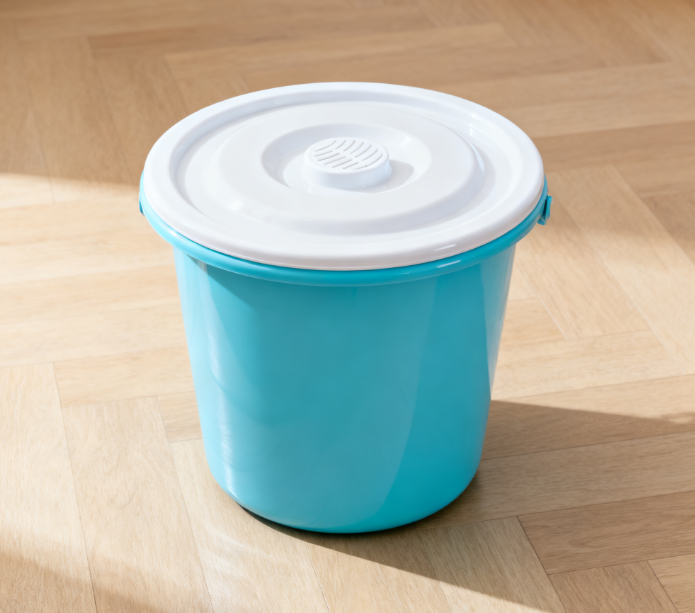
The humble plastic bucket exemplifies how thoughtful design can elevate even the most basic container. Modern plastic buckets incorporate features that earlier generations never imagined.
Graduated measurement markings molded directly into bucket walls eliminate the need for separate measuring tools. Reinforced bottoms prevent warping when containers hold heavy materials. Some designs include nested stacking rims that save space during shipping and storage while preventing the vacuum seal effect that makes separating stacked buckets difficult.
Wire bail handles remain popular, but newer designs use reinforced plastic handles that won't rust or corrode. These handles often include comfort grips and can rotate flat against the container wall for compact storage.
Industrial plastic buckets now feature static-dissipative materials for safely handling flammable substances. Food-grade versions meet strict FDA requirements while maintaining the toughness needed for commercial kitchen environments.
Advances in pigmentation and molding technology have expanded the aesthetic possibilities for bottle containers. Translucent materials allow users to see contents without opening containers, reducing contamination risks and simplifying inventory checks.
Opaque containers protect light-sensitive materials from degradation while maintaining an appealing appearance. Some manufacturers offer containers with color-changing properties that respond to temperature or UV exposure, providing visual confirmation of storage conditions.
Color-coding systems help organizations maintain safety protocols and streamline workflows. Many suppliers now offer extensive color palettes that allow businesses to create customized organizational systems tailored to their specific needs.
The container industry continues to evolve rapidly. Researchers are exploring self-cleaning surfaces using nano-technology that repels liquids and prevents bacterial growth. These advances could revolutionize food storage and medical applications.
3D printing technology may soon allow for on-demand container production customized to exact specifications. This could reduce inventory costs and waste while providing unprecedented design flexibility.
Biodegradable containers that break down completely within specified timeframes are moving from laboratory experiments to commercial viability. These products could fundamentally change how we think about single-use containers and packaging waste.
Selecting the right bottle container or plastic bucket depends on understanding your specific needs. Consider the materials you'll store, the environment where containers will be used, and how frequently you'll need to access contents.
Evaluate the total cost of ownership, not just the purchase price. A more expensive container with better durability and features may prove more economical over time than cheaper alternatives that require frequent replacement.
Don't overlook the importance of supplier reliability and customer support. The best container design loses value if replacement parts aren't available or if technical questions go unanswered.
The innovations transforming bottle container design in 2025 reflect broader trends toward sustainability, efficiency, and user-centered design. From high-tech smart containers to reimagined plastic buckets, these developments offer practical benefits for diverse applications.
As materials science advances and manufacturing techniques improve, expect to see even more creative solutions emerging. The containers we use daily will continue becoming more functional, sustainable, and thoughtfully designed. By staying informed about these developments, you can make choices that serve your immediate needs while supporting a more sustainable future.


