Welcome to contact us: aaa888@zhongsheng1688.cn


Views: 0 Author: Site Editor Publish Time: 2025-11-26 Origin: Site

In the global effort to secure food supplies and control disease vectors, pesticides play a critical role. Equally important is the safe handling, storage, and disposal of these potent chemicals, a responsibility that falls significantly on their primary packaging: the plastic pesticide bottle. Far from being a simple container, these bottles are engineered products designed for maximum safety, functionality, and environmental responsibility.
The vast majority of plastic pesticide bottles are manufactured from High-Density Polyethylene (HDPE). This polymer is selected for a compelling set of properties that make it uniquely suited for this demanding application:
Chemical Resistance: HDPE is highly inert and resistant to a wide range of aggressive chemical compounds, including the solvents and active ingredients found in most herbicides, insecticides, and fungicides. It prevents chemical degradation of the bottle and, crucially, ensures the product inside is not contaminated.
Durability and Impact Resistance: HDPE bottles are tough and shatterproof, a critical safety feature over alternative materials like glass. They can withstand the rigors of transportation, handling in the field, and accidental drops without rupturing.
Moisture Barrier: HDPE provides an excellent barrier against moisture vapor, which can degrade the efficacy of many pesticide formulations.
Beyond the material itself, pesticide bottles incorporate specific design elements to enhance safety and usability:
Child-Resistant Closures (CRCs): A non-negotiable safety feature, these specialized caps require a complex set of motions (e.g., push-down-and-turn) that are difficult for young children to open, helping to prevent accidental poisoning.
Tamper-Evident Seals: An induction seal or membrane under the cap provides visible proof that the container has not been opened or tampered with since leaving the factory.
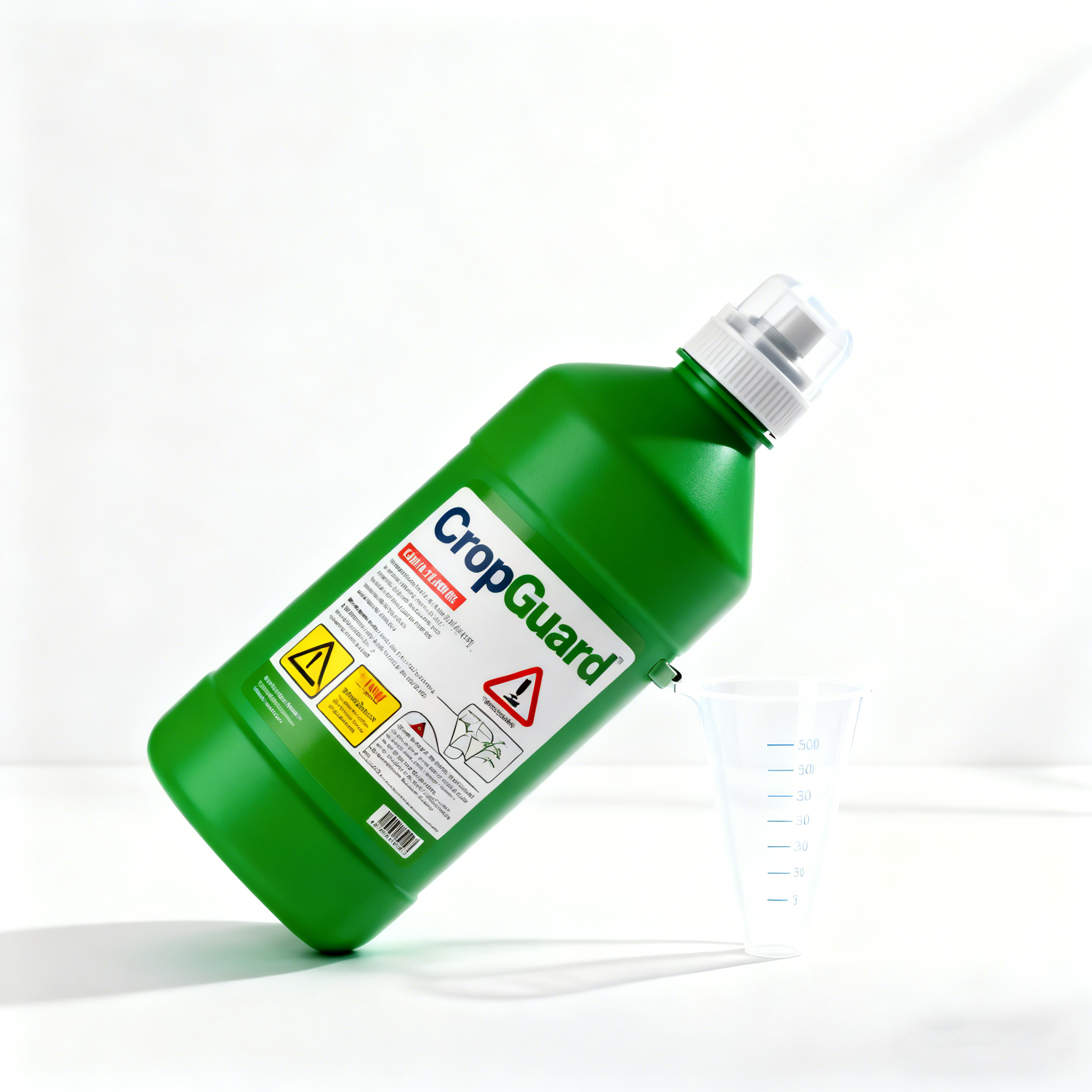
Clear Labeling and Measurement: Bottles are designed with large, flat panels for clear, durable labeling that includes usage instructions, hazard pictograms, and first-aid information. Many feature molded-in measurement scales, allowing users to accurately measure the concentrate without needing a separate measuring cup.
Rinsing and Disposal Instructions: Integral to the design philosophy is the concept of "triple rinsing." Many bottles are shaped to facilitate easy and thorough rinsing after use, and labels explicitly instruct users on this process to minimize residue before disposal or recycling.
The durability of HDPE, while a benefit for containment, poses a significant waste management challenge. An empty pesticide bottle is considered hazardous waste if it contains residues. This has led to two key industry practices:
Triple Rinsing: Farmers and users are encouraged to triple-rinse empty bottles immediately after use. The rinseate is then added to the spray tank for application. This process removes over 99.9% of the chemical residue, effectively declassifying the bottle and making it safer for handling and eligible for recycling programs in many regions.
Product Stewardship and Recycling: Many countries have established container collection programs (e.g., the Ag Container Recycling Council in North America). Collected, rinsed HDPE bottles are recycled into new, approved products, such as plastic lumber for industrial uses, drainage pipes, or even new non-food containers, creating a circular economy.
The following table summarizes the key aspects of plastic pesticide bottles for a quick overview.
| Aspect | Description |
|---|---|
| Primary Material | High-Density Polyethylene (HDPE) is the industry standard. |
| Key Material Properties | Excellent chemical resistance, high impact strength (shatterproof), good moisture barrier, and durability. |
| Critical Safety Features | Child-Resistant Closures (CRC), tamper-evident seals, clear hazard labeling, and measurement guides. |
| Primary Function | To safely contain, transport, and dispense concentrated chemical products while protecting users and the environment. |
| End-of-Life Focus | Triple Rinsing to remove residues, followed by participation in specialized container recycling programs. |
| Environmental Consideration | HDPE is recyclable, but improper disposal leads to hazardous plastic waste. Industry stewardship programs are crucial for a closed-loop system. |
The plastic pesticide bottle is a sophisticated piece of packaging engineering. Its design, centered on robust HDPE material, is a direct response to the critical need for user safety and chemical integrity. The ongoing challenge lies in managing its end-of-life phase, where user responsibility through proper rinsing and industry-led recycling initiatives are paramount to minimizing environmental impact and ensuring the safe lifecycle of these essential agricultural tools.


