Welcome to contact us: aaa888@zhongsheng1688.cn


Views: 0 Author: Site Editor Publish Time: 2025-12-01 Origin: Site

Plastic bottles are a cornerstone of modern packaging, used for everything from water and soft drinks to household cleaners and personal care products. Their lightweight, durable, and versatile nature makes them an indispensable part of daily life. But how are these ubiquitous containers actually made? The process is a fascinating blend of polymer science and precision engineering.
This guide will walk you through the complete lifecycle of plastic bottle manufacturing. We will cover the different types of plastics used, detail the primary production methods like blow molding and injection molding, and explore the quality control measures that ensure every bottle is safe and reliable. By the end, you'll have a comprehensive understanding of how a simple plastic pellet is transformed into the bottle you hold in your hand.
The first step in themanufacture of plastic bottles is selecting the appropriate raw material. The type of plastic used depends entirely on the bottle's intended purpose, as different polymers offer unique properties.
Here are the most common plastics used in bottle production:
Plastic Type | Abbreviation | Key Properties | Common Uses |
|---|---|---|---|
Polyethylene Terephthalate | PET / PETE | Clear, strong, lightweight, good barrier against moisture and gas. | Water bottles, soda bottles, juice containers, peanut butter jars. |
High-Density Polyethylene | HDPE | Opaque, stiff, strong, good chemical resistance. | Milk jugs, detergent bottles, shampoo bottles, motor oil containers. |
Polyvinyl Chloride | PVC | Clear, durable, good chemical resistance, versatile. | Chemical containers, household cleaners, some food packaging. |
Low-Density Polyethylene | LDPE | Flexible, tough, good moisture barrier. | Squeezable bottles (e.g., honey, condiments). |
Polypropylene | PP | High melting point, good chemical resistance, often translucent or opaque. | Ketchup bottles, yogurt containers, medicine bottles. |
Polystyrene | PS | Rigid or foamed, clear, brittle. | Vitamin bottles, single-use cups, food containers. |
Each of these materials is delivered to the manufacturing plant in the form of small pellets, ready to be melted down and molded.
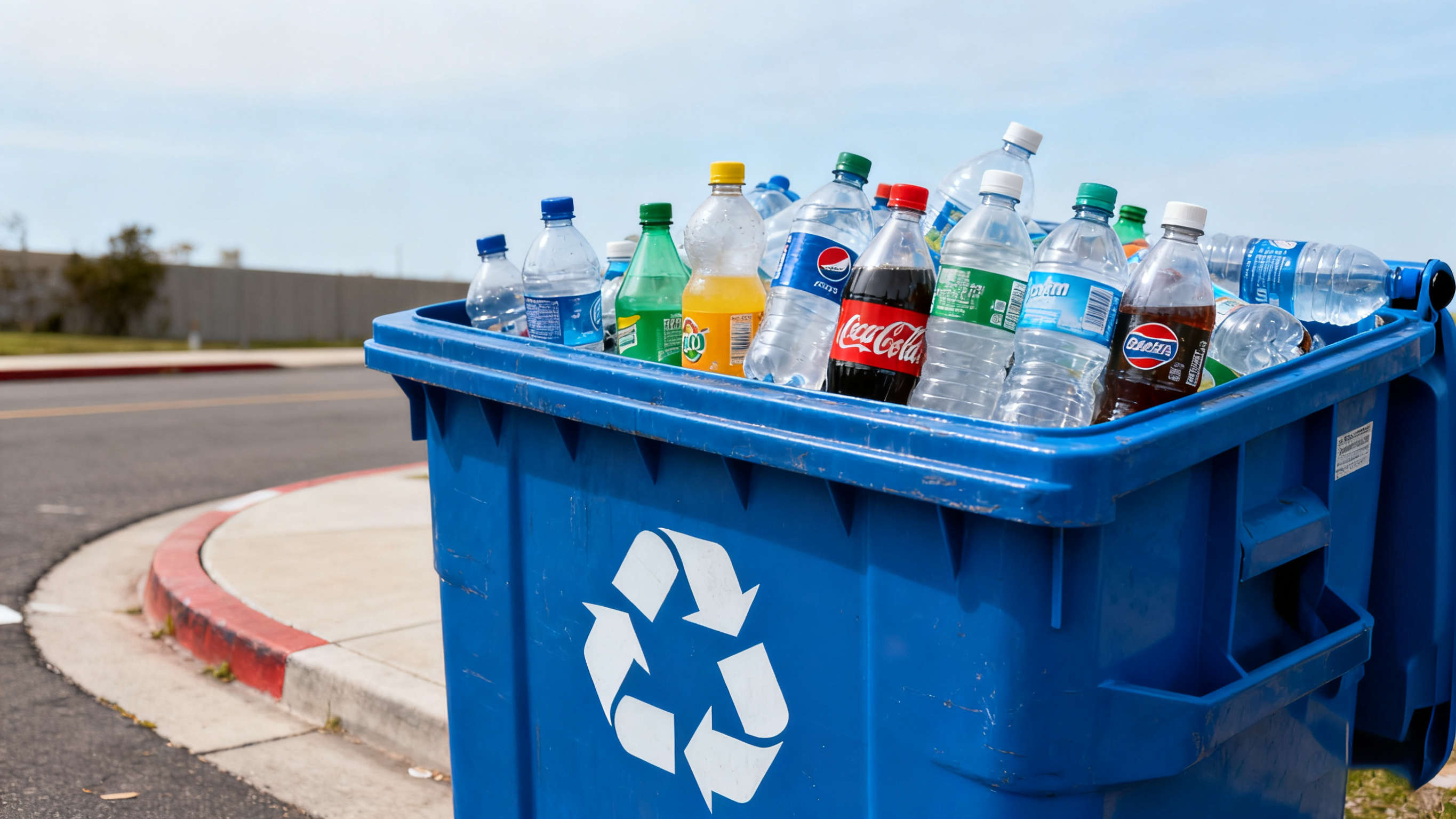
The vast majority of plastic bottles are created using a technique called blow molding. This process involves inflating a heated plastic tube, similar to blowing up a balloon, inside a mold to form its shape. There are three main variations of blow molding.
Injection Blow Molding is a two-stage process known for producing high-quality, high-precision bottles, often used for pharmaceutical or cosmetic products.
Stage 1: Injection: Molten plastic is injected into a mold around a core pin to create a "preform." This preform looks like a small, thick-walled test tube with a fully formed neck and threads.
Stage 2: Blowing: The preform is transferred to a second, cooler "blow mold." Compressed air is blown through the core pin, inflating the preform until it expands to fill the mold cavity, creating the final bottle shape. The bottle is then cooled and ejected.
IBM is ideal for smaller, more intricate bottles and provides excellent control over wall thickness and neck detail.
Extrusion Blow Molding is a common method for producing larger containers like milk jugs, detergent bottles, and industrial drums.
Stage 1: Extrusion: Molten plastic is extruded downward through a die to form a hollow tube called a "parison."
Stage 2: Clamping and Blowing: A two-part mold closes around the parison, pinching one end shut. Compressed air is then blown into the open end of the parison, forcing it to expand against the walls of the mold.
Stage 3: Cooling and Ejection: Once cooled, the mold opens, and the bottle is ejected. Excess plastic, known as "flash," is trimmed off and can be recycled back into the production process.
EBM is faster and more cost-effective for large-volume production of simpler bottle designs.
Stretch Blow Molding is used almost exclusively for making PET bottles, such as those for carbonated soft drinks and water. This process enhances the strength, clarity, and barrier properties of the plastic.
Stage 1: Preform Creation: A PET preform is created using injection molding, similar to the first step of IBM.
Stage 2: Reheating and Stretching: The preform is reheated to a precise temperature. It is then placed in the blow mold, where it is stretched vertically by a core rod while simultaneously being inflated horizontally by high-pressure air. This biaxial orientation aligns the polymer molecules, significantly strengthening the bottle.
This stretching process allows for thinner walls without sacrificing durability, making it perfect for pressurized beverages.
While blow molding is dominant, injection molding is used to create the preforms for IBM and SBM. It is also the primary method for producing solid plastic components like caps, lids, and closures. In this process, molten plastic is injected under high pressure into a precisely machined mold cavity. Once the plastic cools and solidifies, the mold opens and the finished part is ejected. This method is valued for its ability to produce complex and highly detailed parts with exceptional consistency.
Finding a reliable manufacturing partner is crucial for any business. Heshan Zhongsheng Plastic Products Co., Ltd. is a prime example of an experienced and high-quality manufacturer. Located in the Greater Bay Area, Zhongsheng has over 20 years of expertise in both injection and blow molding.
The company's commitment to quality is demonstrated by its long-standing partnerships, including 23 years of cooperation with Franke Company and 25 years of supplying parts to luxury fan companies.
With a 5,000-square-meter facility and over 30 advanced machines, Zhongsheng has the capacity for robust production. They hold multiple certifications, including ISO 9001, NSF, a food container production license, and a chemical container license, making them a trusted supplier for diverse industries, from automotive to hazardous chemical packaging.
Quality assurance is a critical part of the manufacture of plastic bottles. Manufacturers implement rigorous testing protocols to ensure every bottle is safe, functional, and meets specifications.
Common quality control checks include:
Leak Testing: Bottles are pressurized to ensure they are free from holes or weak seams.
Visual Inspection: Automated cameras and human inspectors check for cosmetic defects like discoloration, scratches, or incomplete formation.
Dimensional Analysis: Measurements are taken to verify that the bottle’s height, diameter, and wall thickness meet the required tolerances.
Top Load Testing: This test measures the bottle's ability to withstand pressure from above, which is crucial for stacking during transport and storage.
The manufacture of plastic bottle is a precise and sophisticated process that combines advanced material science with innovative engineering. From selecting the right polymer to choosing the optimal molding technique, every step is carefully managed to produce the perfect container. Understanding this process is key for businesses looking to source packaging that is both effective and reliable.
If you are developing a product and need a trusted partner for your packaging needs, working with an experienced manufacturer like Heshan Zhongsheng can streamline your path to market. Their deep expertise in injection and blow molding ensures you receive high-quality, dependable products tailored to your exact specifications.


