Welcome to contact us: aaa888@zhongsheng1688.cn


Views: 0 Author: Site Editor Publish Time: 2025-11-21 Origin: Site

A ceiling fan is a fantastic addition to any room, offering both cooling comfort and a stylish lighting solution. But what truly defines its performance and aesthetic appeal are the ceiling fan lamp blades. The material, size, and number of blades can significantly impact everything from air circulation to energy efficiency and noise levels.
Choosing the right blades might seem like a small detail, but it's a decision that affects both the function and fashion of your space. Whether you're looking for a powerful cooling solution for a large living room or a quiet, gentle breeze for a bedroom, understanding the nuances of fan blades is essential.
This guide will walk you through everything you need to know about ceiling fan lamp blades. We'll explore the different materials available, explain how size and number influence performance, and provide tips to help you select the perfect fan for your home. By the end, you'll be equipped to make an informed choice that balances style, efficiency, and comfort.
The material of your ceiling fan lamp blades plays a crucial role in their durability, appearance, and performance. Each material offers a unique set of advantages and is suited for different environments and aesthetic preferences.
Wood is a classic and popular choice for fan blades, prized for its natural beauty and timeless appeal. It can range from solid, carved wood for a high-end look to more budget-friendly manufactured wood options.
◆Aesthetics: Wooden blades add warmth and sophistication to a room. They are available in various finishes, from light maple to dark walnut, making it easy to match them with your existing furniture and decor.
◆Performance: Because wood is a relatively light material, fans with wooden blades tend to require less energy to rotate, which can contribute to energy efficiency. However, they are best suited for indoor use.
◆Best For: Living rooms, bedrooms, and dining areas where style is a priority. Avoid using them in humid environments like bathrooms or outdoor patios, as the wood can warp over time.
Metal blades, typically made from aluminum or steel, are known for their strength and durability. They are often found in industrial-style or modern minimalist fans.
◆Aesthetics: Metal blades provide a sleek, contemporary look. They can have finishes like brushed nickel, bronze, or matte black, which complement modern and industrial decor schemes perfectly.
◆Performance: Metal is a strong material that can be shaped into thin, efficient airfoils. This allows fans with metal blades to move a large volume of air, making them ideal for large spaces or areas requiring powerful circulation.
◆Best For: Workshops, garages, large commercial spaces, and rooms with high ceilings. Their robust construction makes them a durable choice for demanding environments.
ABS (Acrylonitrile Butadiene Styrene) is a type of high-strength plastic that has become increasingly popular for fan blades. It offers a great combination of durability, versatility, and affordability.
◆Aesthetics: The biggest advantage of ABS plastic is its versatility. It can be molded into a wide array of shapes and finished to mimic other materials, including wood and metal. This allows for more creative and unique fan designs.
◆Performance: ABS blades are lightweight, quiet, and resistant to humidity. This makes them an excellent choice for any room in the house, including those exposed to moisture.
◆Best For: Bathrooms, kitchens, covered patios, and any room where you want a durable, low-maintenance fan. They are also great for children's rooms due to their safety and variety of fun designs.
Material | Pros | Cons | Best For |
|---|---|---|---|
Wood | Aesthetically pleasing, quiet, energy-efficient | Can warp in humidity, less durable | Indoor living areas, bedrooms |
Metal | Durable, powerful air movement, modern look | Can be noisy, heavier, potential rust risk | Large spaces, high ceilings, industrial settings |
Plastic (ABS) | Moisture-resistant, versatile design, quiet, affordable | May look less premium than wood or metal | Bathrooms, kitchens, outdoor areas |
The number of blades on a ceiling fan is often a topic of debate. While it might seem that more blades equal more air movement, the reality is more complex. The design of the fan, including the motor and blade pitch, plays a just as significant role.
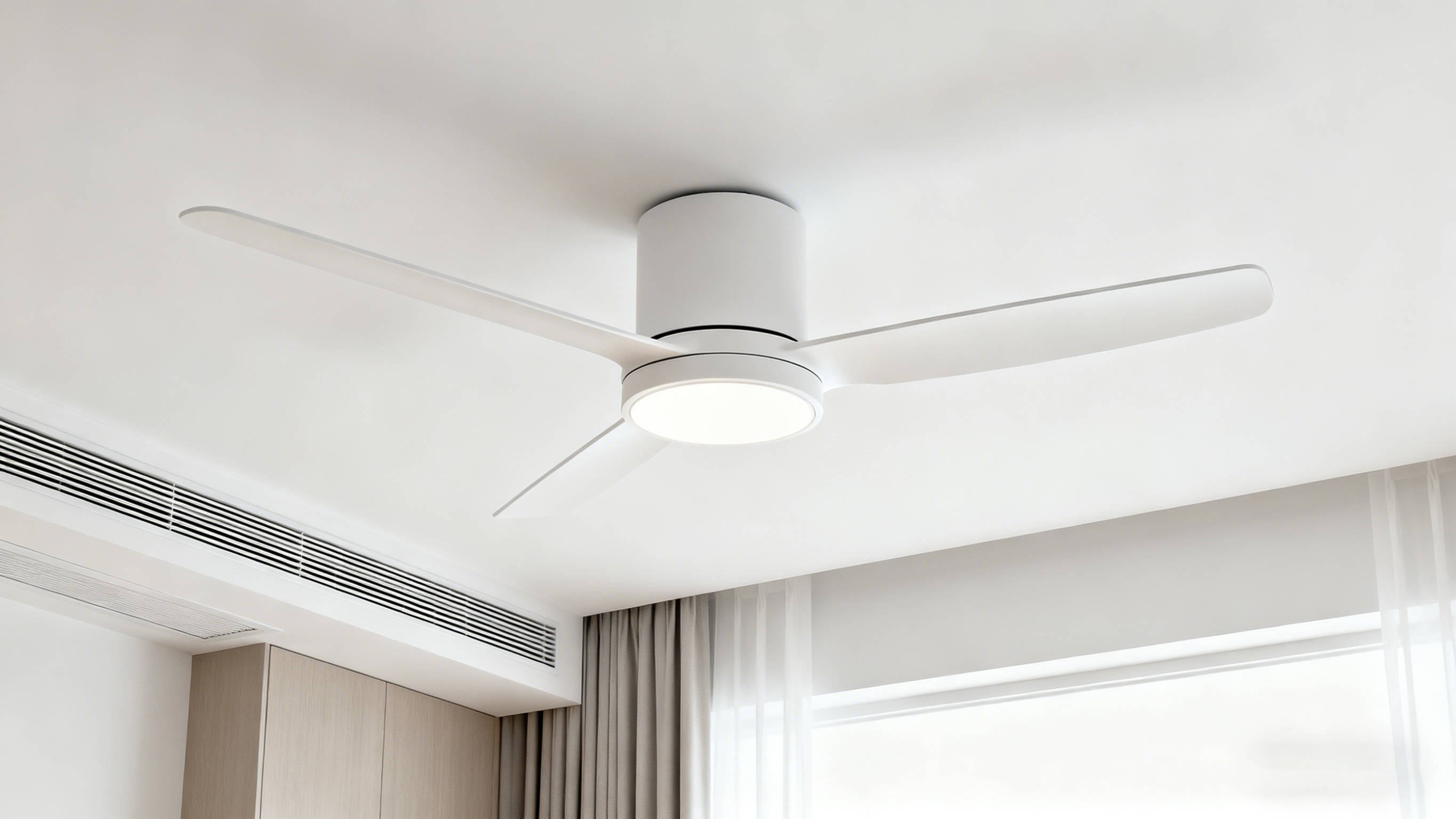
Fans with three blades are often associated with a modern, minimalist aesthetic. Their design is typically more aerodynamic, which can lead to higher efficiency.
◆Efficiency: With fewer blades, there is less drag on the motor. This allows three-blade fans to spin at higher speeds and move a significant amount of air without consuming excessive energy. They are often quieter at high speeds compared to fans with more blades.
◆Style: The clean, simple look of a three-blade fan fits well with contemporary, industrial, and minimalist interiors.
This is the most common configuration for residential ceiling fans. These fans offer a good balance between air movement and quiet operation, fitting a traditional or transitional style.
◆Balance: Fans with four or five blades tend to be better balanced, resulting in less wobbling and quieter operation at lower speeds. While they may move slightly less air at top speed than a comparable three-blade fan due to increased drag, they provide a consistent and comfortable breeze.
◆Style: The classic look of a four or five-blade fan is highly versatile and suits a wide range of decor styles, from traditional to rustic.
Fans with six or more blades, sometimes called "windmill" or "propeller" style fans, are becoming more popular for their unique aesthetic.
◆Gentle Airflow: These fans typically operate at lower speeds. The large number of blades creates a gentle, continuous stream of air rather than a strong, choppy breeze. This makes them ideal for spaces where a subtle, constant circulation is desired.
◆Style: Their dramatic appearance makes them a strong focal point in a room. They are often used in large spaces with high ceilings, such as great rooms or open-concept living areas.
Beyond material and number, the size (or span) and pitch (angle) of the blades are critical for ensuring your fan operates effectively.
Blade Size (Span): The fan's span is the diameter of the circle the blades make as they rotate. The right size depends on your room's square footage. A larger room needs a fan with a wider span to circulate air effectively. As a general rule:
◆Small rooms (up to 75 sq. ft.): 29-36 inches
◆Medium rooms (76-144 sq. ft.): 36-42 inches
◆Standard rooms (144-225 sq. ft.): 44-52 inches
◆Large rooms (225-400 sq. ft.): 52-60 inches
◆Great rooms (over 400 sq. ft.): 60 inches or larger
Blade Pitch: This is the angle of the blades relative to the horizontal plane. A steeper pitch (typically between 12 and 15 degrees) will move more air. However, a pitch that is too steep can strain the motor. High-quality fans are designed with an optimal balance of motor power and blade pitch for maximum efficiency.
Choosing the right ceiling fan lamp blades is about finding the perfect harmony between form and function. By considering the material, number, size, and pitch of the blades, you can select a fan that not only enhances your decor but also provides the ideal level of comfort and air circulation for your space.
Whether you're drawn to the classic warmth of wood, the sleek look of metal, or the versatile durability of plastic, there is a ceiling fan out there that will meet your needs. Take the time to assess your room's requirements and your personal style, and you'll be well on your way to enjoying a more comfortable and beautiful home.